 EN
EN
 NL
NL PL
PL 

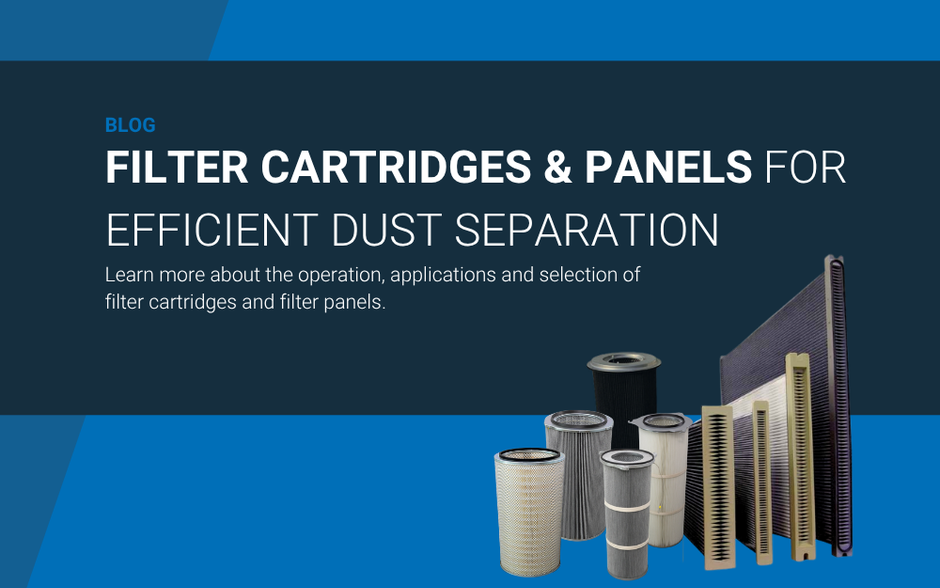
In industrial air filtration, efficient capture of dust particles is important for a stable process in dusty environments. Filter cartridges and filter plates are commonly used solutions for dust separation. Both types of filters offer a large filter surface area in a compact form and are suitable for various industrial applications.
But what are filter cartridges and filter plates exactly, how do they work, and when do you use each type? In this blog, you will learn all about the operation and design of filter cartridges and filter plates.
What are filter cartridges?
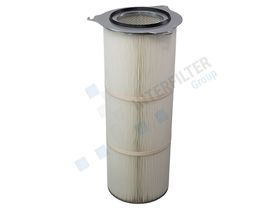
Filter cartridges, also known as dust removal cartridges or cartridge filters, are pleated filter elements used to capture dust particles from air streams in dust collectors. They are available in a wide range of designs, dimensions, and connections, allowing a suitable cartridge to be assembled for almost any dust removal system.
The pleated structure gives filter cartridges a large filter surface area within a limited installation space. This translates into efficient filtration, a long service life, and an easy replacement when needed.
What are filter plates?
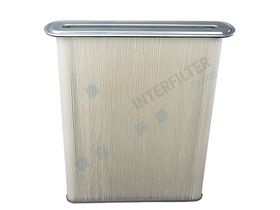
In addition to filter cartridges, filter plates are also used in dust collectors. Filter plates, also known as lamella filters or flat cell filters, are pleated panel filters used in compatible dust collectors.
Like filter cartridges, filter plates offer a large filter surface area in a compact installation space. Due to the glued and uniform pleat spacing, they are stable and easily cleanable during pulse cleaning.
How do filter cartridges and filter plates work?
When using both filter cartridges and filter plates, the contaminated air is passed through the filter medium within the dust collector. All dust particles are then captured on the medium, allowing clean, filtered air to exit the system.
The accumulated dust that remains on the medium, also known as the filter cake, is removed via pulse cleaning. A short, powerful burst of air is blown through the filter in the opposite direction, dislodging the dust to fall into the dust drawer or bag. Both filter cartridges and filter plates can be easily cleaned during operation without the need to shut down the system.
Advantages
Both types of filters offer several advantages:
- Large filter surface area due to pleated construction
- Long service life
- Low pressure drop in the filter collector
- Good cleaning properties during pulse cleaning
- Flexible mounting in existing installations
- Available with FDA Food Grade, ATEX or BIA certification
In addition, filter plates have a high dust-holding capacity and high stability due to the glued and uniform pleat spacing.
Filter cartridges are easy to replace and available in a wide range of dimensions and connections.
Applications
Filter cartridges and filter plates are widely used in industrial environments. Common applications include welding fumes, blasting dust, process dust, powder coating, and laser cutting. These processes require a filtration solution that can withstand continuous loading and varying dust properties.
The right design depends on the type of dust, process conditions, and the load level of the system.
When should you choose filter cartridges or filter plates?
The choice between filter cartridges and filter plates also depends on the available installation space and the cleaning system of the dust collector.
Interfilter offers a wide range of filter cartridges and filter plates and supports you with technical advice and selection, customization for existing dust collectors, and optimization of filtration performance.
If you want to know which solution is suitable for your application, feel free to contact us. Our specialists are happy to assist you.