 NL
 PL


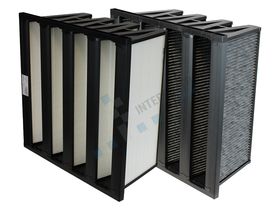
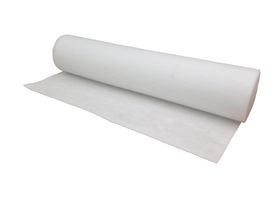
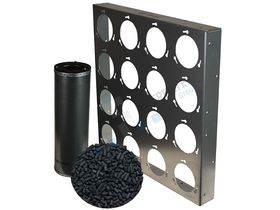
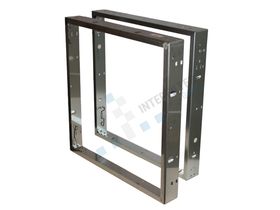
Air Quality Investigations
Investigate current air quality with a Particle Counter. We then analyze the measurement results based on luchtmeetnet.nl, Eurovent 4/23, and the World Health Organization (WHO).
 EN
To ensure that your ventilation system runs optimally and sustainably, we always start by performing an air quality measurement on site. All measured values are analyzed using Eurovent 4/23 and the guidelines of the WHO (World Health Organization). This analysis is processed into a comprehensive report. If the results indicate room for improvement, we provide you with appropriate filter advice that meets various criteria. You can read more about selecting the right air filter here or use our selection tool.
Air filtration means that small particles are filtered from the air. The particles are captured in a filter medium, ranging from ultra fine to coarse filtration. Filtrating fine dust (PM) is very important, as the smallest fine dust particles penetrate deep into the respiratory system and can cause major damage in the body.
To protect your health as much as possible from the dangers of fine dust, we have included various air filters in our product range that comply with the highest class within ISO 16890.
On average, 70% of the energy consumption by air handling installations is attributable to the use of air filters. It is important to use filters that reduce this energy consumption. Because Interfilter Group takes its social responsibility very seriously, it supplies a complete series of air filters with the highest achievable energy label, namely A+. With these air filters, energy savings of 30 to 40% can be achieved. All office buildings must comply with energy label C or better from the 1st of January 2023, and from 2030, these buildings must even comply with energy label A. This law is being introduced to reduce CO₂ emissions in the Netherlands. Our air filters with energy label A+ contribute to making your building more sustainable.
Purchasing air filters with energy label A+ offers several benefits:
We also supply a selection of PM1 air filters. Each type of PM1 air filter has been tested and classified by Eurovent in accordance with the ISO 16890 guidelines and has been assigned a filter class designation. ISO 16890 assesses the filtering efficiency over a range of particles with an aerodynamic diameter between 0.3 and 10 microns. For comparison, a human hair has an average diameter of 50-70 microns. Ultrafine particles, or PM1 (< 1 micron), are the most harmful because they even reach the alveoli. Our air filters filter as much PM1 as possible from the air before the air enters buildings via mechanical ventilation systems.
For more information, visit a specific product category of the air filter or contact one of our employees. When you are looking for a different air filter or need advice, please feel free to contact us.
No. A filter with a higher efficiency does not automatically have more air resistance. The filter media, the filter surface area and the construction of the filter also play a role. That is why filters with a comparable filter class can still differ in energy consumption and performance. Interfilter helps you choose a filter that combines good filtration with the lowest possible resistance and the lowest possible energy consumption.
The amount of air flowing through a filter affects how it works. At a higher air velocity, resistance usually increases. Filter efficiency can also change. That is why it is important to choose an air filter that matches the airflow of your installation.
The amount of air flowing through a filter affects how it works. At a higher air velocity, resistance usually increases. Filter efficiency can also change. That is why it is important to choose an air filter that matches the airflow of your installation.
The filter class and dimensions do not tell the whole story about an air filter's performance. Differences in filter media, filter surface area, construction and dust holding capacity can affect resistance, service life and energy consumption.
The old EN 779:2012 filter standard consisted of classes G1 to F9, with filter performance assessed on efficiency at a particle size of 0.4 micron. The current ISO 16890 standard looks at the size of the particulate matter, within a range of 0.3 to 10 micron, that a filter captures. It uses the classes ISO Coarse, ISO ePM10, ISO ePM2.5 and ISO ePM1, each with an x% capture efficiency. ISO Coarse-x% stands for a coarse filter that captures particles larger than 10 micron. ISO ePM1-x% filters particles smaller than 1 micron from the air. As a result, the standard better reflects the particulate matter that is actually present in the air. Read more about the ISO 16890 standard or feel free to contact us if you have any questions.
In general, a filter of at least filter class ePM1 is used for supply air. For return air or as a pre-filter, a filter in the Coarse, ePM2.5 or ePM10 class is commonly used. For guidance on which filter class is most advisable, you can contact us and we will select a suitable filter based on the Eurovent 4/23 recommendation.
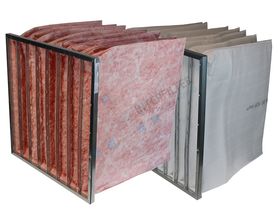
Glass fiber bag filters are made of fine glass fiber media, while synthetic bag filters are usually made of polypropylene. Glass fiber bag filters are more resistant to moisture, such as fog, which means the pressure drop rises less quickly. They are often used for supply air close to intake grilles, where moisture can be drawn in.
Thanks to their fine fibers, glass fiber bag filters are hardly dependent on electrostatic charge, just like synthetic bag filters of type NW. Both types have a high dust holding capacity and a low initial resistance, resulting in a long service life and low energy consumption.
Synthetic bag filters are more commonly used in the food industry because there is less risk of fibers coming loose. They are mechanically stronger than glass fiber filters and are available in sustainable LFC versions, in which only the filter media is replaced and the frame is reused.
Using the selection table below, you can easily select the most suitable air filter for your situation. The table is based on advisory standard 4/23-2020 of Eurovent, which aligns with the European advisory standard EN 16798-3.
Click here to see the pollution level of your location.
For additional information on the recommended air filters, simply click on the recommended filter type.

Air Quality Investigations
Investigate current air quality with a Particle Counter. We then analyze the measurement results based on luchtmeetnet.nl, Eurovent 4/23, and the World Health Organization (WHO).

Reporting & Filter Advice
The analysis is compiled into a report. Do the results indicate room for improvement? Then we provide suitable filter advice that meets various criteria.

Applying the Filter Advice
Upon approval, the recommended air filters are implemented at the location, and we monitor this application.

Evaluating & Optimizing
After a predetermined period, an air quality measurement can be conducted again if desired, and this will be evaluated along with all other results.