 NL
 PL






Analyzing
Identifying needs and mapping out the current situation on-site.
 EN
Together we ensure a healthy, safe work environment while trying to reduce the impact on the environment and taking into account aspects such as ATEX or FDA. We can map out your entire process on location where filtration is applicable and look into your needs. Through development and engineering, we can provide you with appropriate advice focusing on longer operating times, better performance, less waste, cost optimization, and circularity.
Looking for filters for fine dust? Then take a look at our air filters.
Dedusting is the separation of dust particles from a gas or air stream. The separation of dust particles from a stream is usually applied for two reasons:
Interfilter Group has various types of dust filters in its product range, suitable for your process. You can come to us for, among other things:
If you are looking for another dedusting filter, you can also come to us. Together with you, we will select the right dust filter depending on your situation. In addition to the dedusting products, Interfilter Group also supplies flexible cuffs for the movement of dry powder or dust.
Our filters are available in various designs and come with necessary certificates, such as an ATEX or food certificate.
If you need advice on your application or our possibilities, please feel free to contact one of our employees.
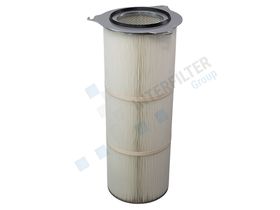
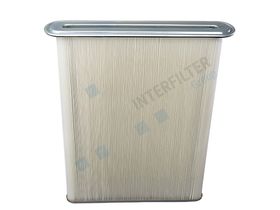
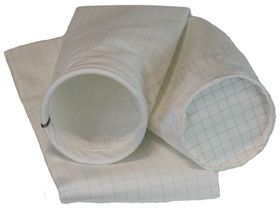
These filter types mainly differ in shape and in the type of installation in which they are used. Filter cartridges always have a pleated filter medium, allowing a large filter surface area to be incorporated into a compact design. Filter bags are elongated filter elements that are widely used in industrial dust collection systems. Filter pockets have a flatter shape. Both filter bags and filter pockets are fitted around a filter cage. The existing installation largely determines which type of filter element is required.
The right filter medium depends on the type of dust and the conditions within the process. Interfilter supplies media including polyester, polypropylene, acrylic, cotton and aramid. Various treatments are also available, such as PTFE, oil and water repellent finishes and flame retardant properties. Temperature, moisture, the characteristics of the dust and the cleaning method all influence the choice. Interfilter supports you in selecting the right filter medium for your installation.
An ATEX version may be required when combustible dust particles in combination with air can create an explosive atmosphere. This can occur, for example, in certain production processes where fine dust is released.
An antistatic filter medium is used when electrostatic charge in the installation needs to be limited. Static electricity can develop when dust particles and air move along the filter material. This can be particularly important in environments with combustible or explosive dust.
The required version depends on the ATEX classification of the installation and its surroundings. The need for an antistatic filter medium also depends on the type of dust, the installation and any applicable ATEX requirements. The application should therefore be assessed in advance when there is a risk of explosion.
Dusts can differ significantly from one another. One type of dust may be dry and easy to remove during cleaning, while another may be fine, sticky or moist. The temperature and chemical properties of the process also play a role. This is why different filter materials and surface treatments are available. By matching the filter medium to the dust, both filtration and filter cleaning can perform more effectively.
A rapid increase in resistance can have several causes. More dust may be entering the system than the filter was selected for, the available filter surface area may be too small, or the cleaning system may not be functioning sufficiently. Sticky or moist dust can also be more difficult to remove from the filter medium. If filters regularly become clogged sooner than expected, it is advisable to assess not only the filter itself, but also the process conditions and the cleaning system.
Many dust filters are cleaned during operation to remove the accumulated dust layer from the filter medium. This can be done, for example, with compressed air or by mechanical cleaning. The filter medium and its construction must be suitable for the cleaning method used. A filter that is not properly matched to the cleaning system may become contaminated more quickly or have a shorter service life. The cleaning method is therefore an important factor in filter selection.
Yes. Interfilter can supply a suitable replacement filter for many existing dust collection systems. We consider the dimensions, mounting method, current filter material and process conditions. Custom-made filter bags and filter pockets are also available. Do you have a part number, drawing or specifications of the current element? Send these to us so we can assess the possibilities for improving your process.

Analyzing
Identifying needs and mapping out the current situation on-site.

Filter Advice
Thanks to development and engineering, we can provide you with tailored advice specific to your process.

Implementing
The implementation and testing of the proposed solution.

Evaluating & Optimizing
After a testing period, an analysis is conducted, and conclusions are drawn based on the results.


