 NL
 PL







Analyzing
Identifying needs and mapping out the current situation on-site.
 EN
Together we ensure a healthy, safe working environment while trying to reduce the burden on the environment and taking into account factors such as ATEX or FDA. We can map out your entire process on location where filtration is applicable and look at your needs. Thanks to development and engineering, we can provide you with suitable advice focusing on longer service life, better performance, less waste, cost optimization, and circularity.
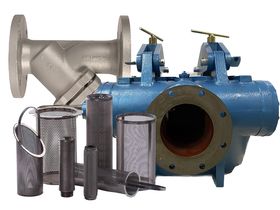
Liquid filtration refers to the separation of solid particles from a liquid. This is done using various types of industrial filters, from coarse to fine filtration. The choice of filter depends strongly on the exact application and process conditions. Our cartridge filters are designed to filter any liquid in industrial applications. The liquid passing through the filter can range from water to oils.
Interfilter Group offers a solution for every amount of liquid contamination, tailored to your process. You can contact us for, among other things:
If you are looking for a different type of liquid filter, you can also contact us. Together with you, we select the right liquid filters, depending on your specific situation.
Our industrial filters are available in various versions and come with necessary certificates, such as an FDA (Food Grade) certificate.
Read more on the specific pages about the different categories of liquid filters and the various types, sizes, and models. For more information, feel free to contact one of our employees through our contact form, calling, messaging, emailing, or using our live chat.
The micron rating indicates the particle size a liquid filter is designed to remove. With a nominal micron rating, a large proportion of particles around the specified size are retained. An absolute rating is used when a higher and more clearly defined separation efficiency is required. Interfilter supplies liquid filters in various nominal and absolute ratings. The appropriate rating depends on the required purity of the liquid and the requirements of the process.
Filter bags are commonly used when relatively large amounts of contaminants need to be removed from a liquid. They have a high dirt holding capacity and are available in various materials and micron ratings.
Filter cartridges are often used when finer or more precise filtration is required and are available in different versions, including wound, meltblown and pleated cartridges.
In many existing installations, the choice between a filter bag and a filter cartridge is already determined by the existing filter housing. For new applications or modifications, the choice depends on factors such as the flow rate, the amount of contamination, the required filtration fineness and the resistance of the filter material to the liquid being filtered. Based on these data, Interfilter can select a suitable solution.
The flow rate determines how much liquid must be processed by the filter per unit of time. A higher flow rate usually requires a larger filter surface area to keep the resistance within the desired limits. The dirt load also determines how quickly the filter becomes saturated. With a high dirt load, a larger filter surface area or a different filter design can help achieve a longer service life. Flow rate and dirt load are therefore always taken into account when sizing a liquid filter and selecting a suitable filter housing.
The micron rating only indicates the size of the particles you want to remove. For proper filter selection, the liquid, temperature, flow rate, dirt load, filter material and required filtration performance are also important. The same micron rating can also perform differently depending on the filter construction. A filter should therefore always be selected based on the complete application.
Yes. For applications where specific requirements apply to material use or food contact, various certified versions are available. Interfilter supplies, for example, liquid filters with FDA Food Grade certification as well as versions with Halal and Kosher certification. The required certification depends on your process and the sector in which the filter is used. Contact us if you require a specific declaration or certification.

Analyzing
Identifying needs and mapping out the current situation on-site.

Filter Advice
Thanks to development and engineering, we can provide you with tailored advice specific to your process.

Implementing
The implementation and testing of the proposed solution.

Evaluating & Optimizing
After a testing period, an analysis is conducted, and conclusions are drawn based on the results.


