 EN
EN
 NL
NL PL
PL 

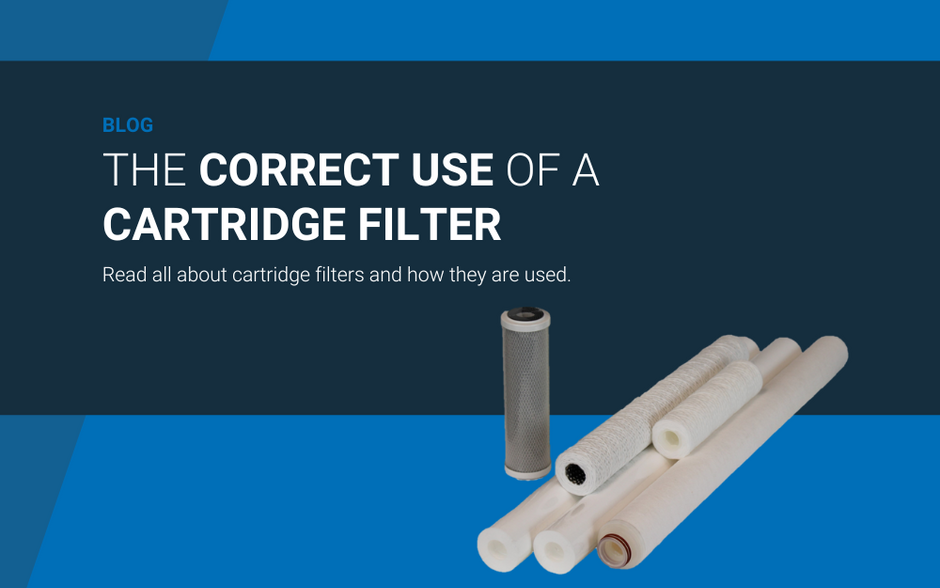
In industrial processes, reliable liquid filtration is essential to guarantee product quality and protect equipment. But what makes candle filters so distinctive, and why are they so important across different industries? In this blog, we take a closer look at the operation, applications, benefits, and selection criteria of candle filters.
What is a filter cartridge? 

A candle filter, also known as a filter cartridge, consists of cylindrical filter elements that remove impurities and particles from liquids. This process contributes to a cleaner end product and extends the lifespan of equipment. Whether in the food, pharmaceutical, or chemical industry, candle filters can be an important component in the efficiency and safety of production processes.
How do filter cartridges work?
In filter cartridges, the liquid flows through the filter material. During this process, unwanted particles are captured while the filtered liquid exits the system. Depending on the filter type, solid particles, bacteria, chemicals, and other contaminants can be effectively removed. This not only improves product quality but also reduces maintenance costs and extends the service life of machines.
Filter cartridges operate based on depth filtration or surface filtration.
Depth filtration
In depth filtration, contaminants are trapped within the pores of the filter material. This allows a large volume of dirt to be captured before the filter becomes saturated.
Surface filtration
In surface filtration, particles remain on the surface of the filter material. This principle is often applied in finer filtration where a high level of filtration accuracy is required.
Applications of filter cartridges in different industries
Filter cartridges are used in various sectors where liquid filtration plays an important role.
- Food industry: For removing bacteria, yeasts, unwanted particles, and microorganisms from liquids such as beverages and oils.
- Pharmaceutical industry: Ultra-pure filtration of liquids and gases, for example in the production of medicines and vaccines.
- Chemical industry: Purification of solvents, oils, and other aggressive and chemically reactive substances, contributing to a more efficient and safer production process.
- Water treatment: To filter sediment, rust, bacteria, and other particles from drinking water and process water.
- Oil and gas industry: Removing contaminants from fuels and lubricants.
The advantages of filter cartridges
Filter cartridges offer several advantages compared to other filtration methods:
- Large filtration surface: Ensures efficient filtration and long service life.
- High efficiency: Effectively removes unwanted particles and contaminants.
- Low energy consumption: Due to low resistance, energy demand remains limited.
- Long service life: Made from durable materials for extended use.
- FDA approved: Suitable for applications in the food and pharmaceutical industries.
- Low resistance: Minimizes pressure drop and optimizes flow.
Our range of filter cartridges
At Interfilter, we supply various types of filter cartridges, each with unique properties that match specific filtration requirements:
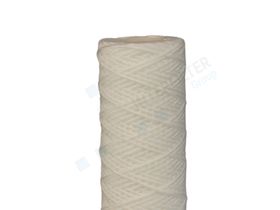
Wound candle filters
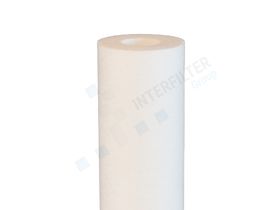
Wound filters consist of a fiber wound spirally around a core. Due to this structure, they have a high dirt-holding capacity and are often used in water filtration and chemical processes.
Meltblown filters
Meltblown filters are produced from thermoplastic microfibers, usually polypropylene. The layered structure provides efficient depth filtration and is widely used in the food and pharmaceutical industries.
Pleated filters
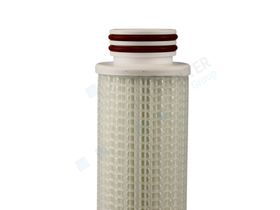
Pleated filters have a large filtration surface due to their folded structure, resulting in low pressure drop and longer service life. Suitable for high-flow applications.
Membrane filters
Membrane filters provide the finest filtration, down to 0.1 micron or even smaller, making them suitable for critical applications in the pharmaceutical, biotechnology, and electronics industries.
High-flow filters
High-flow filters are designed for applications with high flow rates and low pressure drop, such as water treatment and industrial processes.
An important distinction is that some filters are hydrophilic (water-attracting) while others are hydrophobic (water-repelling), depending on the specific application and the liquid to be filtered.
Common connections for filter cartridges
During the installation of filter cartridges, the correct connection is important to ensure proper sealing and optimal operation. Some common connections include:
- DOE (Double Open End): Both ends of the filter are open, allowing the filter to be clamped into a filter housing with a compression system.
- SOE (Single Open End): One end of the filter is closed, often with a specific O-ring seal for a leak-free connection. Examples include a 222 O-ring or a 226 O-ring with a spear/fin on the other side of the element.
- Bayonet connection: A quick and secure mounting method often used in pharmaceutical and high-purity applications.
- Threaded connections: Suitable for systems where easy replacement is required.
- Flange connection: Used in heavy industrial applications where a robust and secure connection is required.

Filter housings for filter cartridges
The housing of a filter cartridge also contributes to the effectiveness and durability of the filtration system. At Interfilter, you can also find high-quality filter housings for filter cartridges.
Stainless steel filter housings
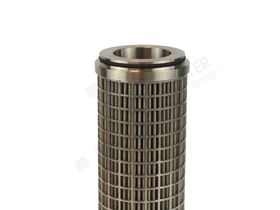
Stainless steel filter housings are resistant to high temperatures and corrosive liquids and are widely used in the chemical and pharmaceutical industries. We supply both single and multi-cartridge stainless steel housings, depending on the required capacity.
Plastic filter housings
In many cases, plastic filter housings are an excellent choice for applications with less aggressive liquids and lower temperatures. We offer housings made from PVC, PP, and PTFE. In some cases, certain liquids may affect stainless steel more strongly than materials such as PP, making plastic the preferred option.
Filter cartridges compared to other filtration techniques
Compared to, for example, bag filters and membrane filters, filter cartridges offer a higher dirt-holding capacity and greater flow rates. They are also more durable and require less maintenance.
How to choose the right filter cartridge
The choice of the right filter cartridge depends on factors such as:
- properties of the liquid
- type and size of contaminants
- required filtration accuracy
- process pressure and temperature
- compatibility with existing systems
Selecting the correct filter contributes to a stable filtration process and a longer system lifespan.
Maintenance and replacement of your filter cartridge
To ensure optimal performance of candle filters, regular maintenance is important:
- timely inspection and cleaning prevent clogging
- correct installation helps minimize leaks
The service life of a filter cartridge depends on the application and the level of contamination in the liquid being filtered. Filters are usually replaced based on pressure differences (pressure drop) and decreasing filtration performance.
Another important factor is the service life of a filter, meaning the time during which the filter functions optimally before becoming saturated. Regular maintenance and timely replacement are essential to maintain filtration efficiency and product quality.
More information or advice about filter cartridges?
Our specialists are happy to help you find the right filtration solution. Would you like to know which filter cartridges best suits your application? Feel free to contact me or one of my colleagues for personal advice.