 EN
EN
 NL
NL PL
PL 

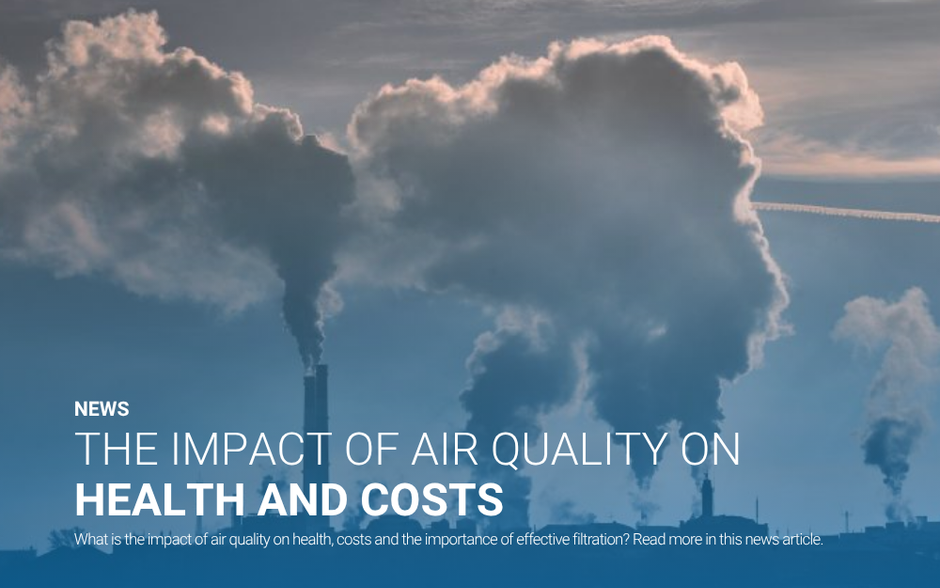
Poor air quality can cause serious health complaints or worsen existing complaints. Air pollution can lead to respiratory conditions such as asthma, chronic bronchitis, and COPD. In addition, air pollution is also associated with neurological complaints and strokes.
The impact of poor air quality goes beyond health alone. TNO has calculated, based on multiple studies, that the societal costs due to disease burden can amount to €7,800,000,000 annually.
What are the main sources of air pollution?
It is striking that only a limited number of pollutants are responsible for 99% of the disease burden. Fine particles, nitrogen dioxide, formaldehyde, ozone, and radon are the main sources.
Within this group, fine particles by far have the largest share. PM2.5 is responsible for approximately 71.9% of the disease burden, and PM10 for approximately 5.7%. Nitrogen dioxide follows with 9.8% and formaldehyde with 7.9%.
Within the PM2.5 mass, the smallest fine particles (PM1) make up the largest share. PM1 on average constitutes 60 to 80% of this fraction. These particles can penetrate even deeper into the respiratory tract and can even enter the bloodstream through the alveoli.
What is the importance of effective filtration?
To limit these pollutants, effective air filtration is necessary. Air filters with a minimum efficiency of ePM1-70% in the supply air are recommended for schools and office buildings. These filters remove at least 70% of particles of 1 micron and smaller from the airflow.
It is sometimes assumed that investing in better filters has little effect because the outside air is also polluted. However, in practice, ventilation systems continuously bring in large amounts of outside air. This also introduces a significant amount of pollution into the building.
By filtering this air, the total exposure is significantly reduced. Filters with filter class ePM1-70% remove most of the fine particles from the airflow and thereby reduce the risk of health complaints.
What sustainable and cost-conscious choices are available?
Investing in air filters with a minimum filter class of ePM1-70% is not only relevant for health but also economically justified. Fewer health complaints lead to less absenteeism and lower healthcare costs. The additional cost of better filters is often recouped.
Energy consumption also plays a role in cost savings. Eurovent, a leading expertise organization in ventilation and air quality, has developed an energy label for air filters. Energy label A+ indicates low energy consumption during the filter's lifespan. When combined with a filter class of ePM1-70%, a solution is created that is responsible and sustainable both from a health and energy perspective.
Support from Interfilter
Interfilter offers a wide range of air filters with a filter class of ePM1-70% or higher, combined with a Eurovent energy label A+. Interfilter supports organizations in achieving a healthy and efficient indoor climate.
Want to know what Interfilter can do for your situation? Contact us for personalized advice.