 EN
EN
 NL
NL PL
PL 

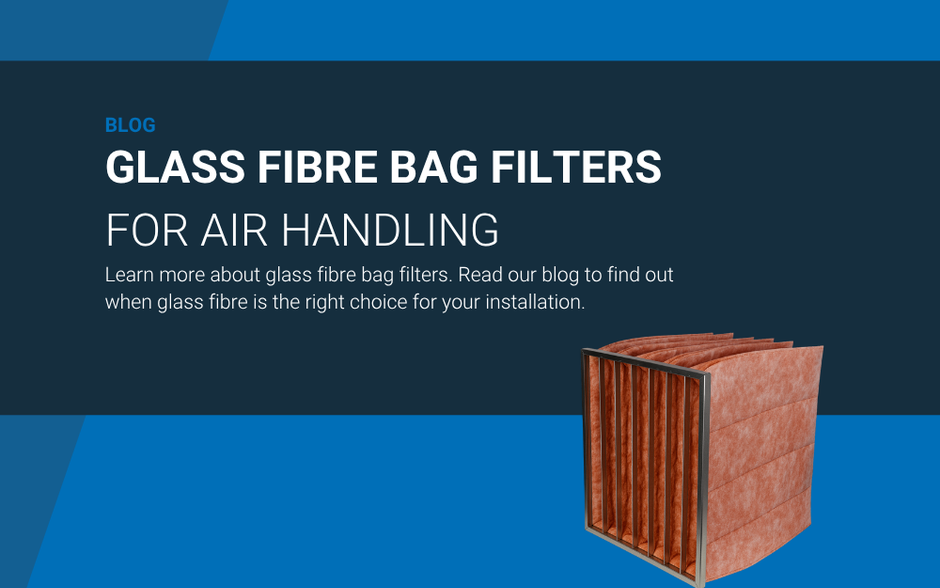
Glass fibre bag filters are used in a wide range of applications, from office buildings to hospitals and industrial environments. But what makes a glass fibre bag filter different from a synthetic bag filter, and when is glass fibre the right choice? In this blog, we explain.
What is a glass fibre bag filter?
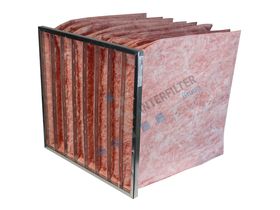
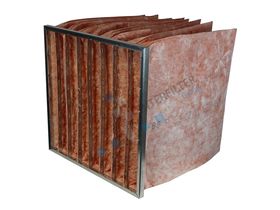
A glass fibre bag filter is an air filter in which the filter medium is made from thin glass fibres. These fibres form a dense fibre network that effectively removes fine dust, pollen, bacteria and other particles from the air, including in higher filter classes.
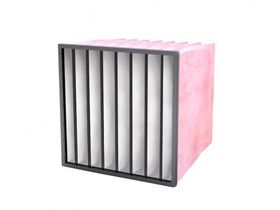
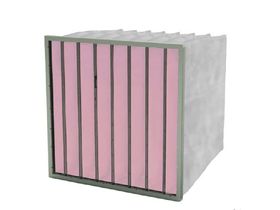
The filter medium consists of multiple layers. The structure and number of layers determine the filtration grade and service life of the filter. Glass fibre bag filters are supplied as standard with a metal frame, but can also be supplied with a plastic or wooden frame if required.
What is the difference between glass fibre and synthetic filters?
The main difference lies in the filter medium and the structure of the filter cloth. Glass fibre bag filters generally offer a higher filtration grade at a relatively low pressure drop, a longer service life and stable performance throughout the entire operating period. Synthetic bag filters are lightweight, flexible and mechanically stronger, and are often used for coarse filtration or when material cost savings are the deciding factor.
They are not competing products, but complementary solutions. In practice, both types are often combined: synthetic prefilters for coarse filtration, followed by glass fibre final filters for fine filtration.
Which filter classes are available?
Glass fibre bag filters are available in various filter classes according to the ISO 16890 standard. This is the global standard for air filters in ventilation systems. At Interfilter, the filters are available from filter class ISO ePM10 up to ISO ePM1, allowing virtually any installation to be fitted with a suitable filter. The majority of the range is Eurovent certified, which is relevant for tenders where demonstrable compliance with standards is required.
Why choose glass fibre bag filters?

These bag filters have several properties that make them a suitable choice for many installations:
- High dust holding capacity: thanks to the woolly medium structure, replacement intervals are longer and maintenance requirements are lower.
- Low pressure drop: the ventilation motor experiences less resistance, which directly results in lower energy consumption.
- Stable performance: glass fibre filters perform consistently throughout the entire operating period.
- Eurovent certified: almost our entire range of glass fibre bag filters is certified, providing demonstrable compliance with standards for tenders and projects.
When should you choose a glass fibre filter?
Glass fibre bag filters are used in situations where higher requirements are placed on air cleanliness, efficiency and/or service life. From a higher filter class onwards, glass fibre is often the most suitable choice. For lower filter classes and less critical applications, a synthetic bag filter may be sufficient.
In practice, this applies to a wide range of sectors:
- Data centres: dust free air is essential for the reliable operation of equipment.
- Hospitals and healthcare centres: high hygiene requirements call for filters that provide the required protection.
- Museums and archives: vulnerable collections must be protected against dust deposits.
- Office buildings and the hospitality sector: air quality contributes to the comfort and wellbeing of employees and guests.
We also supply other sectors. Contact us for more information.
Which glass fibre bag filters does Interfilter offer?
At Interfilter, we supply a broad range of glass fibre bag filters, tailored to various installations and applications. The range includes the glass fibre SG series for general ventilation, the glass fibre G series for applications with higher air cleanliness requirements, the SGK and GK series as a combination of synthetic and glass fibre filter media, and the glass fibre bag filters with carbon for environments where odour reduction is required in addition to filtration.
In addition to standard sizes, we also supply custom sizes. These filters are produced to order in our own production department.
No obligation filter advice
Do you need help choosing the right glass fibre filter? Contact us. Interfilter supports you in selecting a suitable filtration solution.
For every installation, we carefully assess which filter best matches the application, the required filter class and the specifications of the system.