 EN
EN
 NL
NL PL
PL 

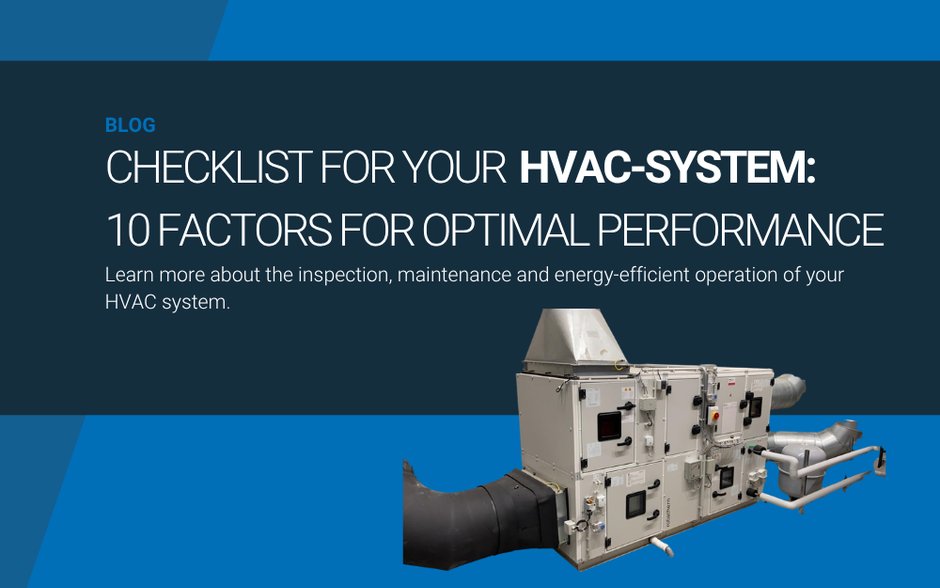
A properly functioning HVAC system is essential for a healthy indoor climate, low energy consumption and a long service life of your equipment. Unfortunately, regular inspections are sometimes postponed, resulting in contaminated filters, higher energy costs and unexpected system failures. In this blog, we provide practical guidelines to help you assess whether your HVAC system is performing optimally.
What is an HVAC system?
HVAC is an abbreviation for heating, ventilation and air conditioning. An HVAC system therefore provides heating, ventilation and cooling within a building. It manages the supply of fresh, filtered air, removes contaminated air and maintains the temperature and humidity within a space. An HVAC system generally consists of several components that work closely together:
- Air handling unit: heats, cools and filters the supplied air.
- Fans: ensure the supply and extraction of air through the system.
- Air filters: remove dust, allergens and other particles from the air.
- Ductwork: distributes the treated air throughout the building.
- Control technology: monitors and controls temperature, humidity and airflow.
Because these components continuously interact, the performance of your system strongly depends on how well each component is maintained.
Why is regular inspection of your HVAC system important?
Regular inspections help prevent unnecessarily high energy costs, maintain air quality and minimise the risk of unexpected failures. An HVAC system that is not inspected regularly gradually loses efficiency, with direct consequences for your business operations and the health of building occupants:
- Higher energy costs: Contaminated components and clogged filters increase the pressure drop, causing fans to work harder and increasing energy consumption.
- Reduced air quality: Deferred maintenance leads to an accumulation of dust, allergens and, in some cases, mould. This directly affects indoor air quality.
- Shorter equipment lifespan: Components operating under increased load wear more quickly and increase the risk of failures.
- Unnecessary downtime: Unplanned repairs can cause your system to be out of operation at the least convenient moment.
By using a structured checklist, you can help prevent these problems and maintain control over the performance of your system.
What determines the performance of your HVAC system?
Several factors determine how well your system performs, from filter quality to control technology. Key points include:
- Filter quality The filter class determines how effectively dust, pollen and fine particulate matter are removed from the air and therefore influences indoor air quality.
- Pressure difference across the filter The pressure difference indicates how contaminated a filter is. An increasing value, typically between 150 and 250 Pa, may indicate that replacement is approaching. A differential pressure gauge across the filters is therefore recommended.
- Moisture and mould Moisture within the system may indicate an underlying issue and can pose a risk to air quality if it goes unnoticed. Mould develops particularly well in humid conditions.
- Condition of the fans Unusual noises or vibrations are often an early indication of wear to belts or bearings, even before this results in a failure.
- Clean heat exchangers Dust and grease deposits reduce heat transfer and therefore reduce the efficiency of the system.
- Seals and clamps of filter frames Leaks around frames or gaskets allow unfiltered air to pass through, reducing filtration effectiveness.
- Control technology and sensors Accurate temperature, humidity and differential pressure measurements form the basis of a properly functioning system.
- Airtightness of the system Leaks in the ductwork waste energy and reduce comfort within the building.
- Cooperation with a maintenance partner An experienced maintenance partner understands your system and its operating conditions. They are best placed to determine when and how maintenance is required.
- Recording measurement data Historical data on contamination, pressure and performance helps identify trends at an early stage and supports future decision making.
How can you ensure sustainable and energy efficient maintenance?
Sustainable maintenance includes choosing filters with a low pressure drop and a long service life. This enables you to combine a healthy indoor climate with more sustainable business operations. A low pressure drop means that air flows through the filter with less resistance. As a result, the fan requires less power to circulate the same volume of air. This directly reduces the energy consumption of your system and therefore lowers your energy costs and CO2 emissions.
In addition to a low pressure drop, the amount of material used in a filter also plays a role in the sustainability of your maintenance strategy. Traditionally, the entire filter, including the frame, is discarded during replacement, even though the frame is often still fully functional. Our bag filters with an LFC frame (Lean Filter Circular frame) provide a solution. When using an LFC system, only the filter medium is replaced, while the frame is retained and reused. This significantly reduces waste and costs and provides directly measurable benefits:
- Less waste: the frame can be used for multiple life cycles instead of being discarded with every filter replacement.
- Lower long term costs: you only pay for the filter medium instead of repeatedly purchasing a complete frame.
- Comparable filtration performance: LFC filters meet the same ISO 16890 classes as traditional bag filters without compromising air quality. They are also available with a Eurovent A+ energy label.
By choosing LFC filters with a circular frame for maintenance, you combine lower energy consumption with reduced material use thanks to the reusable frame. Proper maintenance therefore contributes not only to the performance of your system, but also to a structurally lower environmental footprint.
Non binding advice on your HVAC system
Would you like to make sure your HVAC system is performing optimally? Contact us for non binding advice.
Contact us by phone on +31 181 - 31 11 87 or email info@interfilter.nl